Norton council seeks state funding fix for Wise County fire and fire-related EMS services
Norton City Council will meet with Fire Chief Todd Lagos on Tuesday to discuss a resolution urging the Virginia General Assembly to review Aid to Localities funding for Wise County fire and rescue services.
Norton’s fire and EMS system has grown increasingly dependent on local tax dollars, despite the city having a high share of residents at or below the poverty line.
The state funding formula for the Aid to Localities grant has not changed in 31 years. The program does not account for the differences between low-income and wealthy communities; both receive the same formula-based support.
75% of the program’s funding comes from 1% of the revenue from fire insurance policies written by insurance companies operating in Virginia. These monies feed the Virginia Fire Programs Fund, which then distributes money to the Aid to Localities program and fire-fighting related grants in the state.
The resolution includes a request that the Assembly increase the rate from 1% to 2% over 2 years, permanently establish the $5 million Personal Protective Equipment grant program, and create an At-Risk Locality Fund to support poverty-level & low-income communities in maintaining fire protection services. The town of Marion has passed the same kind of inquiry for the Assembly’s review.
Norton City Manager Jeffrey Shupe told me that while the request seeks additional funding, it is not intended to reallocate existing monies from larger municipalities.
Wise County and the City of Norton rank among Virginia’s lowest-funded localities for emergency medical services based on population, land area, and call volume.
Both report average response times of over 60 minutes and decreasing volunteer participation. The combined effect results in extreme vulnerability to fire emergencies and challenges ranging from equipment maintenance to staffing shortages.
Tuesday’s meeting is at 5:00 p.m. in the Council Chambers. Public participation is encouraged.
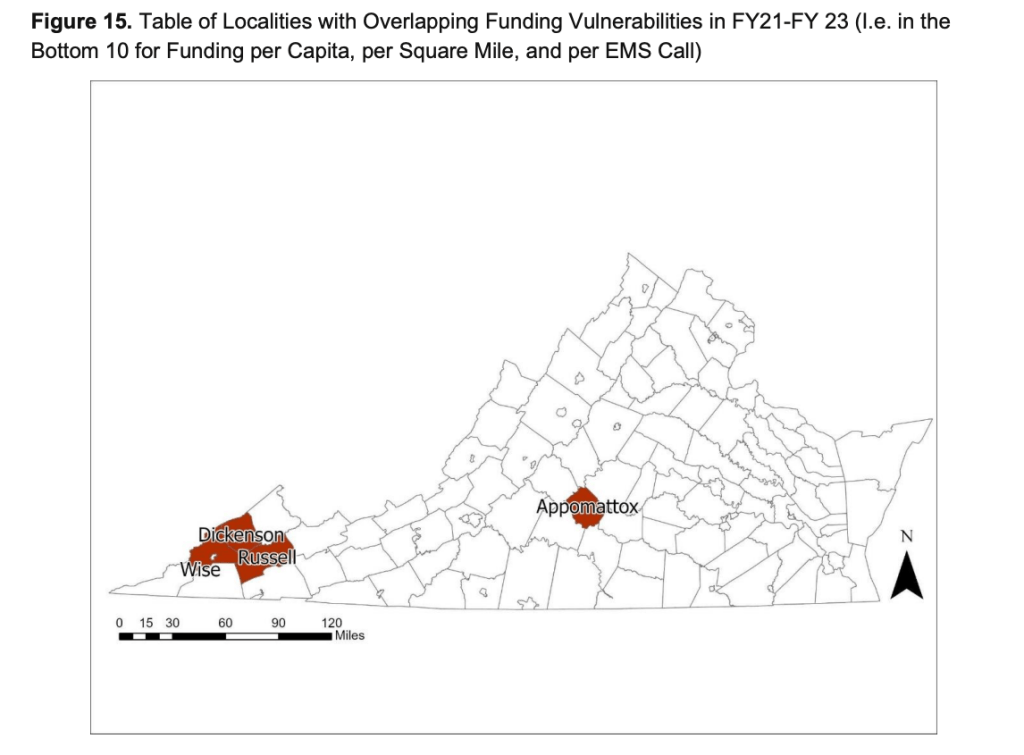
Map of localities with overlapping funding vulnerabilities based on population, land area, and call volume (FY21-23) Courtesy of VCU.
 Capitol City Chaos